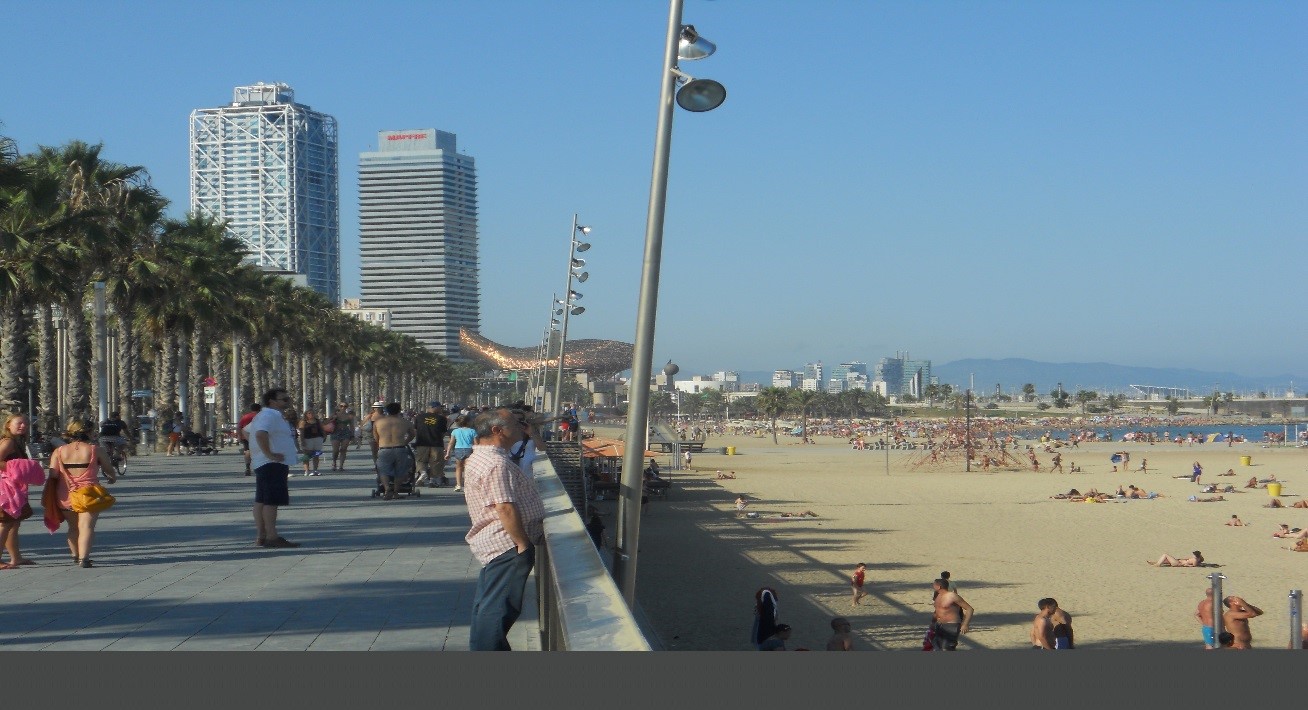

The “Crazy” city that is located in the northeast part of Spain and one of the most attractive in Europe. It can often be confused as the capital of Spain because of the popularity that has. Boredom is almost unheard to visitors of the city due to variety of activities and attractions that happened in the town.
Barcelona is separated into many different districts and neighborhoods; each offering a unique flavor of the city!
The most popular communities worth visiting are:
1.Ciutat Valle: Also known as the Gothic Quarter, this is the oldest part of the city incorporating the popular street of Las Rambles. Visit the museum exploring the first Roman foundations and enjoy the superb seafront with its boardwalk and beach
2.L’Eixample: Outside the original city walls, this area of the city is where many of the best modernist architecture is to be found. It is also home to many of the best bars and clubs in the city.


3.Gracia: Having once been a Catalan town on the outskirts of the city, the growth of Barcelona has seen the area become a suburb, with a significant student population and the beautiful architecture of Gaudi’s Park Guell.

4.Sants-Montjuic: A nice open area with several lovely parks, this is where many of the Olympic facilities are located and it is also home to the high speed train station with links to the rest of the country. The area of terminal station for bus and trains is called: Barcelona Sants – Av.de Roma
Barcelona is considered the “best beach city” in the world by National Geographic, but their beaches weren’t used for leisure until 1992
Today there are seven beaches with a total of 4.5 km of coastline, but before 1992, Barcelona’s seaside was completely run over by industries, and there existed no beach for the use of the city’s populace and tourism.
It wasn’t until the city’s redevelopment for the 1992 Olympic Games that the city moved their industries and converted the seaside area into an exemplary leisure area for locals and tourist alike; including the improvement of two beaches and the creation of five new beaches.
According to Discovery Channel, Barceloneta beach is the best urban beach in the world and the third best beach in the world


Two Things to Remember At Bali Airport
Kid-Free Adult Things to Do In Bali


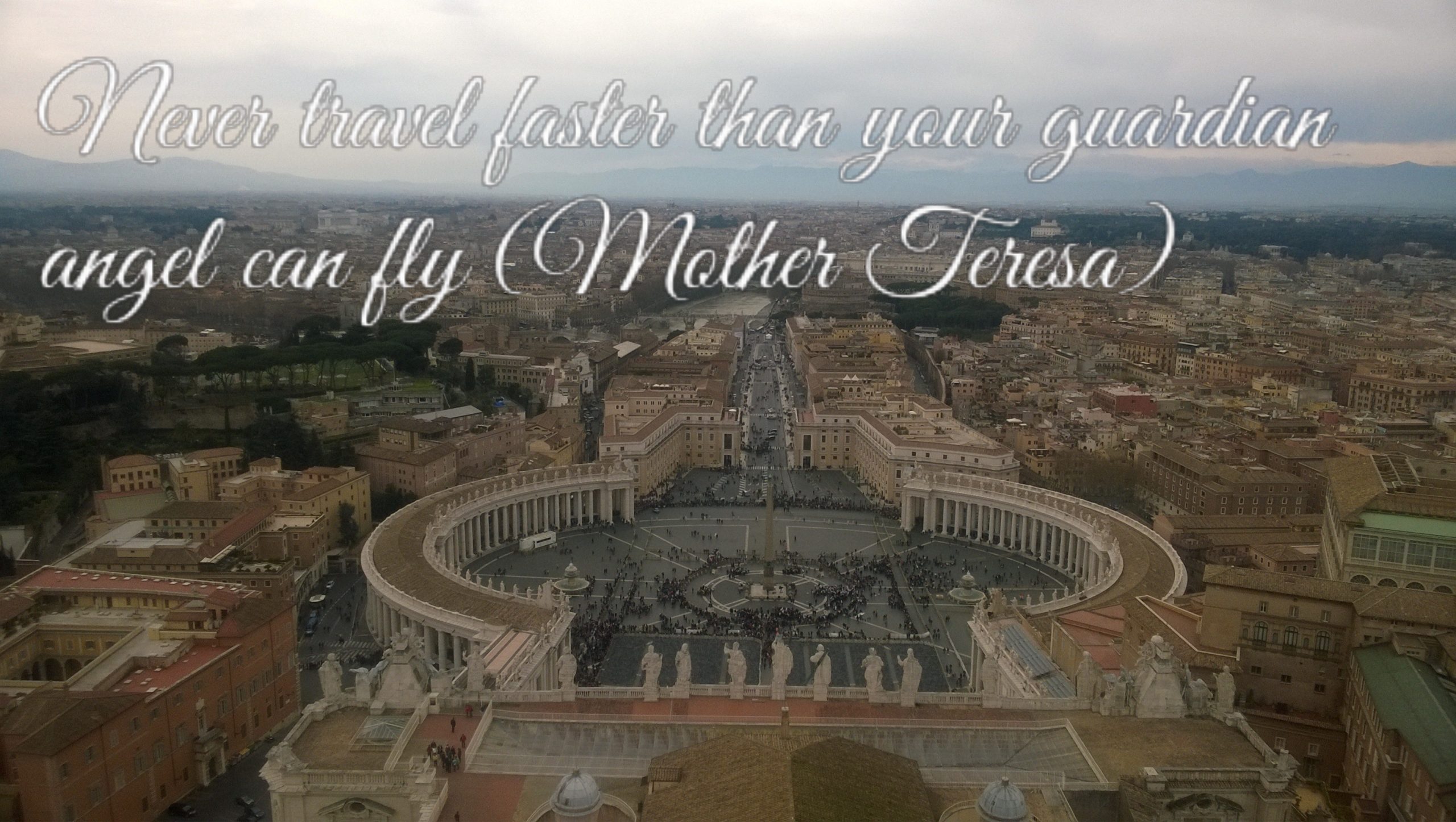
You are ready for Rome, right? So here are some recommendations that will save you a lot of heartache on your trip to the Eternal City.
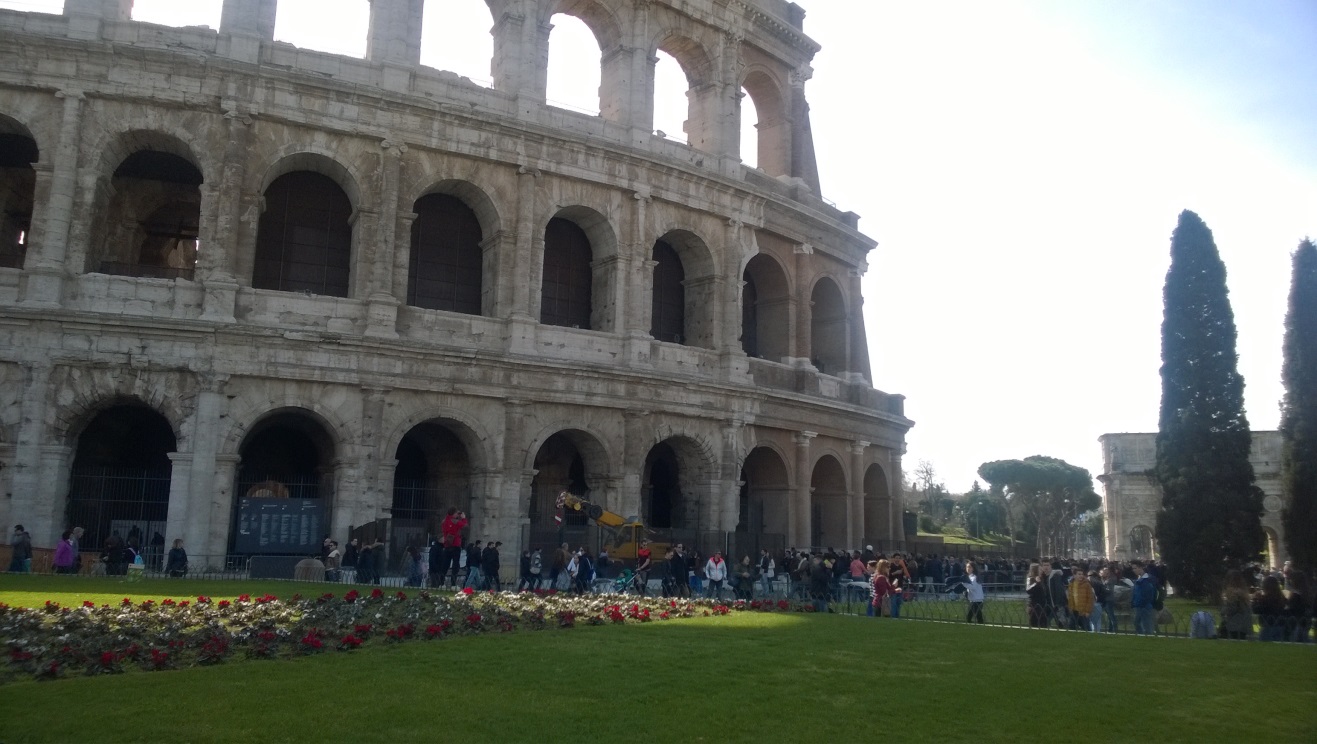
 Also known as the” Flavian Amphitheatre” is an oval Amphitheatre in the center of the city Rome, Italy. Build of concrete and sand. It is the largest amphitheater ever built. The Colosseum is situated just east of the Roman Forum. Construction began under the emperor Vespasian in AD 72, and was completed in AD 80 under his successor and heir Titus. The Colosseum could hold, it is estimated, between 50,000 and 80,000 spectators,[5][6] having an average audience of some 65,000;[7][8] it was used for gladiatorial contests and public spectacles such as mock sea battles (for only a short time as the hypogeum was soon filled in with mechanisms to support the other activities), animal hunts, executions, re-enactments of famous battles, and dramas based on Classical mythology.
 The Pantheon from Greek meaning “temple” of every god” , is a build in Rome , Italy on the site of an earlier building commissioned by Marcus Agrippa during the reign of Augustus (27 BC – 14 AD). It is one of the best-preserved of all Ancient Roman buildings, in large part because it has been in continuous use throughout its history, and since the 7th century, the Pantheon has been used as a church dedicated to “St. Mary and the Martyrs” (Latin: Santa Maria ad Martyres) but informally known as “Santa Maria Rotonda”.[5] The square in front of the Pantheon is called Piazza della Rotonda. The Pantheon is a state property, ruled by Italy’s Ministry of Cultural Heritage and Activities and Tourism through the Polo Museale del Lazio; in 2013 it was visited by over 6 million people.
Two kings of Italy are buried in the Pantheon: Vittorio Emanuele II and Umberto I, as well as Umberto’s Queen, Margherita.
The Pantheon is in use as a Catholic church. Masses are celebrated there on Sundays and holy days of obligation. Weddings are also held there from time to time.
 The Trevi Fountain (Italian: Fontana di Trevi) is a fountain in the Trevi district in Rome, Italy, designed by Italian architect Nicola Salvi and completed by Pietro Bracci. Standing 26.3 metres (86 ft) high and 49.15 metres (161.3 ft) wide,[1] it is the largest Baroque fountain in the city and one of the most famous fountains in the world. The fountain has appeared in several notable films, including Federico Fellini’s La Dolce Vita.
Legends
Legend holds that in 19 BC thirsty Roman soldiers were guided by a young girl to a source of pure water thirteen kilometres (8.1 miles) from the city of Rome. The discovery of the source led Augustus to commission the construction of a twenty-two-kilometre (14-mile) aqueduct leading into the city, which was named Aqua Virgo, or Virgin Waters, in honour of the legendary young girl. The aqueduct served the hot Baths of Agrippa, and Rome, for over four hundred years.


The Sistine Chapel (/ˌsɪstiːn ˈtʃæpəl/; Latin: Sacellum Sixtinum; Italian: Cappella Sistina [kapˈpɛlla siˈstiːna]) is a chapel in the Apostolic Palace, the official residence of the Pope, in Vatican City. Originally known as the Cappella Magna, the chapel takes its name from Pope Sixtus IV, who restored it between 1477 and 1480. Since that time, the chapel has served as a place of both religious and functionary papal activity. Today it is the site of the Papal conclave, the process by which a new pope is selected. The fame of the Sistine Chapel lies mainly in the frescos that decorate the interior, and most particularly the Sistine Chapel ceiling and The Last Judgment by Michelangelo.
 The Roman Forum (Latin: Forum Romanum, Italian: Foro Romano) is a rectangular forum (plaza) surrounded by the ruins of several important ancient government buildings at the center of the city of Rome. Citizens of the ancient city referred to this space, originally a marketplace, as the Forum Magnum, or simply the Forum.
It was for centuries the center of Roman public life: the site of triumphal processions and elections; the venue for public speeches, criminal trials, and gladiatorial matches; and the nucleus of commercial affairs. Here statues and monuments commemorated the city’s great men. The teeming heart of ancient Rome, it has been called the most celebrated meeting place in the world, and in all history.[1] Located in the small valley between the Palatine and Capitoline Hills, the Forum today is a sprawling ruin of architectural fragments and intermittent archaeological excavations attracting 4.5 million sightseers yearly
These are the 5 most visited places in Rome but…there are a lot of other beautiful places that we will explore in the next articles…
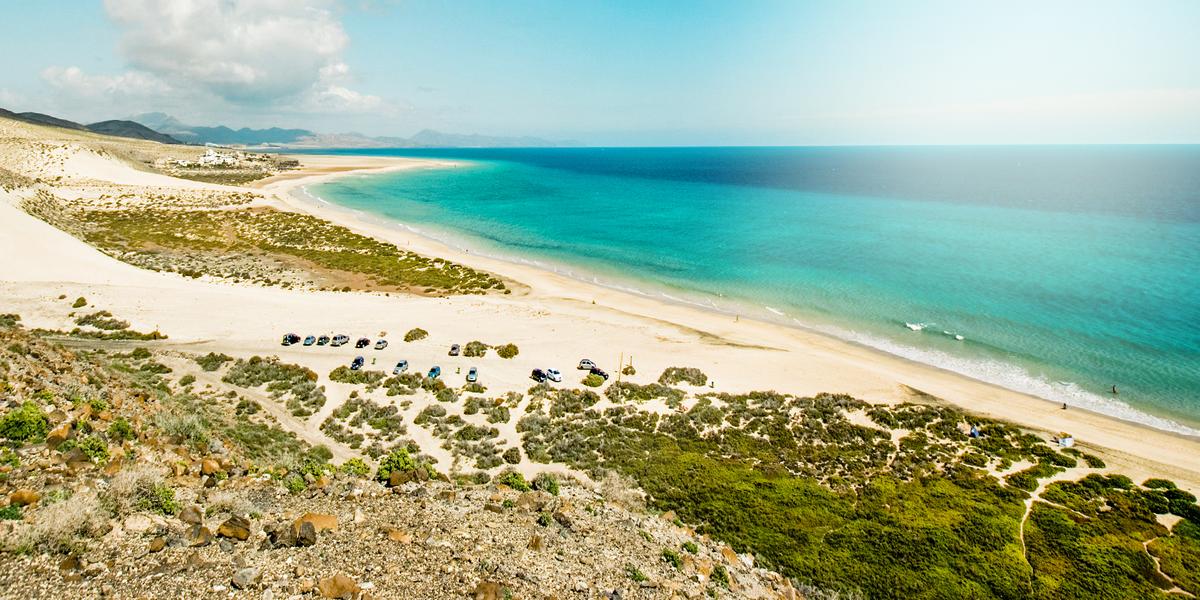

It’s impossible to ignore the fact that Fuerteventura’s greatest attraction is its beaches. The Canary Island boasts the sort of playas that automatically have the theme from Lawrence of Arabia going around your head… if you’re old enough to remember it. Whilst it’s impossible to ignore them, there are other qualities that give the second largest Canary Island a personality that sets it apart from the other islands.
Go forth, explore and notch up our 5 hot things to do on Fuerteventura.
1.Sunbathe au natural
 I did say it was impossible to ignore the beaches. If you’re going to go to Fuerteventura to perk up the tan, why not do it properly and not be left with a two-tone body for a change. If there’s anywhere to strip off completely to soak up the sun, it’s Fuerteventura.
The golden dunes around Corralejo and El Cotillo in the north and Jandia in the south are so expansive that even the most shy naturist should be able to find a discreet spot to expose all in complete privacy.
Plenty of sunseekers on these beaches aren’t so coy. Try to take a photo of the gorgeous sands and you can be sure that somewhere in the frame there will be a man standing surveying the views, hands on hips, letting it all hang out.
You don’t have to go all the way to enjoy Fuerteventura’s gorgeous beaches. However, if others sunbathing naked is an issue, stick to the beaches closest to the resorts.
2.Eat cheese
 With Fuerteventura’s legendary weather and waves drawing surfers, windsurfers, kite-boarders and… err SUP-pers to the island, the obvious thing would be to suggest people take to the water. But jumping on a board is a niche activity that not everybody is either able, or particarly wants to do. We can all pop a chunk of cheese into our mouths though.
On Fuerteventura, goats rule. There are far more of them than human residents. The capital, Puerto del Rosario was once known as Puerto des Cabras – Port of the Goats. The cheese from Fuerteventura is famous across the Canary Islands for being a savoury sensation. In fact it’s renowned internationally, winning prestigious awards every year.
Known as Majorero, after the breed of goats it’s produced from, it is sold as fresco (or tierno), semi-curado and curado. Fresco would suit people who don’t like their cheese to have much of a personality. Semi-curado is matured for between 20 and 60 days and packs a decent, tangy punch. Curado is the choice for cheese die hards. Matured for over 60 days, it strains at its packaging to unleash its assertive flavours in your mouth.
For the more adventurous who’d like the full Fuerteventura cheesy experience, there’s also goat milk liqueur. It’s not as bad as it sounds, trust me, but I won’t be replacing my stock of red vino with it.
Visit a goat farm to chalk up the lot and photograph some cute kids into the bargain.
3.Aloe vera
 The volcanic curves of Fuerteventura’s landscape is lacking in plant life, which makes endless fields of spiky aloe vera all the more surreal and surprising when you stumble across them. Aloe vera is one of the world’s wonder plants and has been for aeons. Alexander the Great used it to heal battle wounds and Cleopatra slapped it on to make her more beautiful.
You can wash your hair with it, use it as shower gel, keep your skin young, use it as sun protection, spray it on as perfume and even drink it. It’s claimed that Fuerteventura’s climate is responsible for making the aloe vera grown there the best in the world.
A trip to an Aloe Vera factory isn’t only a fascinating eye opener, you might come away looking years younger.
4.Salt Museum
 The Salt Museum and Salinas del Carmen, close to Caleta de Fuste, consist of a museum dedicated to the history of salt and rows of neat white beds, the salinas. The museum is interesting, and you can pick up bags of salt in the attached shop, but maybe not something that makes you think ‘wow, I’ve got to go there’.The salinas beside the museum are the real attraction.
The people of Fuerteventura have been working these salt basins since the late 19th century and they’re the only working salinas left on the island. Miniature snowy white mountains of salt sharply contrast against burnt orange earth and ebony volcanic rocks to create a scene that is almost zen-like in its tranquil beauty. It is strangely soothing to explore the paths that dissect the salinas and fascinating to watch the old men ‘rake’ the salt.
A skeleton sculpture of a large whale between the salinas and the sea is an added bonus.
5.Barbary squirrel watching
 Anyone who knows the Canary Islands will know that even though they are near Africa, there’s a dearth of wildlife. The Barbary squirrel might not exactly be in the ‘big five’ league but when there’s a lack of other animals, spotting one can be something to get quite excited about. Fuerteventura has lots of them.
We can kid ourselves that we head to the Mirador Risco de las Peñas, near Betancuria, to be overwhelmed by Fuerteventura’s vibrant orange, volcanic scenery. But when the ardillas (Barbary squirrels) start hopping from rock to rock and striking up poses they’ve nicked from a meerkat documentary, the vistas are forgotten about.
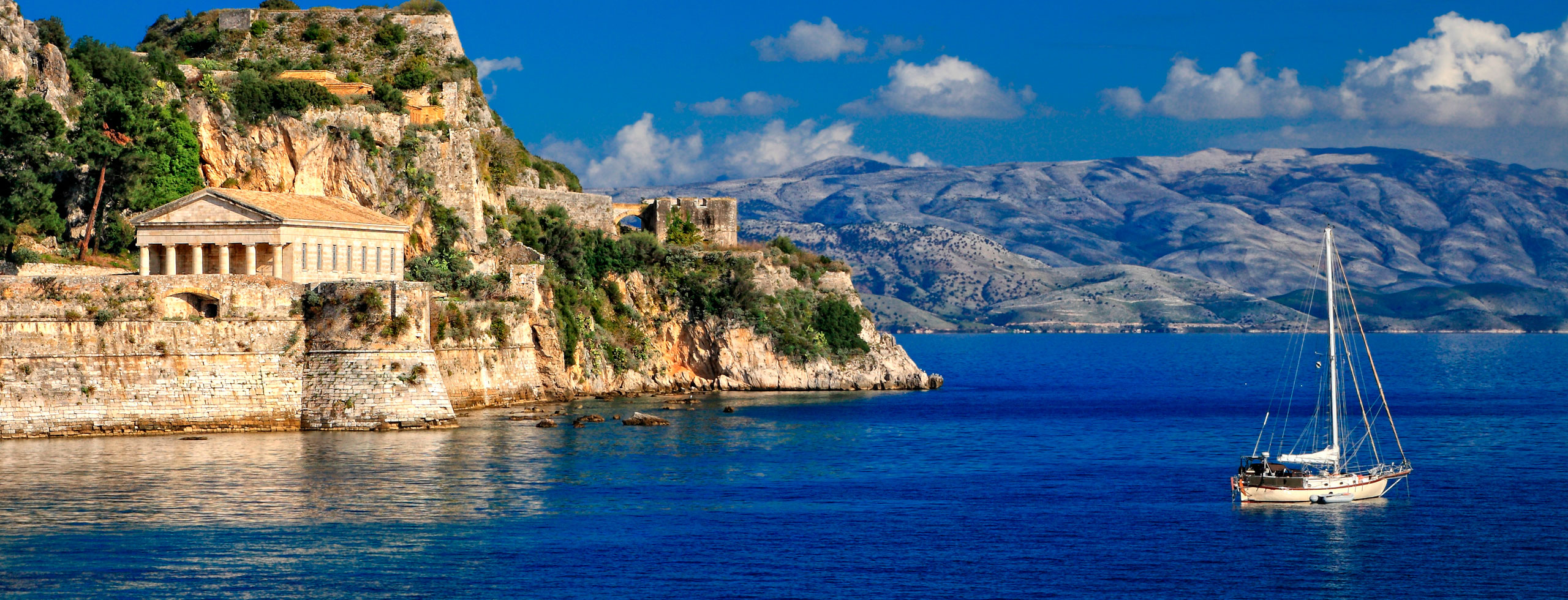

The best things to do on Corfu include visiting Paleokastritsa, a day trip to Albania, seeing the Achilleion Palace and Corfu Town’s Old Fort, and also the Archaeological, Byzantine and Asian Art Museums in Corfu Town. A walk around the Old Town of Corfu Town is another must, including a visit to the church of Ayios Spiridon, the island’s patron saint.
To the south of Corfu Town is the beautiful view from Kanoni, and the villa of Mon Repos which now houses the Museum of Palaiopolis. In the north of the island is its highest point, Mount Pantokrator, and the drive up here is another of the best things to do on Corfu.
So here’s our list of suggestions in alphabetical order of what’s best about Corfu:
The Achilleion Palace
The Achilleion is an over-the-top palace that was built for the Empress Elizabeth of Austria in the 1890s. Over the years it’s been a hospital, a casino, and starred in a James Bond movie. Today you can tour its rooms and gardens, with their many statues.
Albania Day Trip
Several companies do day trips and overnight visits to Albania. We went with Sipa Tours and had an amazing and fascinating time.
Archaeological Museum, Corfu Town
This isn’t one of the biggest archaeological museums in Greece but it’s worth visiting just to see the amazing Gorgon Frieze, a huge 6th-century BC pediment from a temple that is absolutely stunning when you enter the room and first see it.
Byzantine Museum, Corfu Town
This lovely little museum is in a 15th-century church and brings together some fine examples of Byzantine carvings, icons and other items, mainly from the 16th and 17th centuries but some as old as the 13th century. Corfu had a fine tradition of icon painting, as renowned artists from Crete would stay here on their way to work in Venice, and some of them settled or returned to Corfu.
Church of Ayios Spiridon, Corfu Town
The body of St Spiridon, the island’s patron saint, is preserved here in a silver casket to the side of the altar. The 15th-century church is in the heart of the Old Town, its spire easily visible, and a visit here will reveal a constant queue of people waiting to pay homage to the saint by kissing the casket.
Corfu Old Town
The narrow streets of Corfu’s Old Town are filled with everything from the kind of souvenir shops you find anywhere to craft workshops, wood carvers, food shops and cafes. It’s easy to get lost in the narrow, winding streets, but it’s worth getting lost and there’ll always be someone to help you find your way out again. High on the list of the best things to do on Corfu.
Kanoni
The view of Mouse Island from Kanoni is one of the most recognisable scenes on the whole island, familiar from many photos. Of course the photos don’t show you that the airport runway is just off to one side – but it’s still a beautiful spot.
Mon Repos and Palaiopolis
Mon Repos is known to English people as the place where the Duke of Edinburgh was born, and after years of wrangling with the former Greek royal family, the villa is now open to the public. It contains an enjoyable museum which tells the story of the island and of Corfu Town, and there are also some good walks in the grounds around.
Mount Pantokrator
Dominating the northeast corner of the island, Mount Pantokrator is the highest point on Corfu at 2972ft/906m. You can drive all the way to the top, and visit the monastery there. Fabulous views, of course, and a lovely drive through rural Corfu. Definitely one of the best things to do on Corfu.
Museum of Asian Art, Corfu Town
Sometimes called the Museum of Asiatic Art, a visit here also lets you see inside the Palace of St Michael and St George, which houses the museum. This contains over 10,000 items collected in the Far East by a Greek diplomat, and all we can say is that he had incredibly good taste. For us this is one of the best Greek museums outside Athens.
New Fort and Old Fort, Corfu Town
The two forts both provide nice views over the rooftops of Corfu Town, and out to sea. The New Fort dates from the 16th/17th centuries and is only called the New Fort because the Old Fort already existed when it was built. The Old Fort complex contains a small museum and a church built by the British, while the New Fort just has a small cafe.
Paleokastritsa
If you have to single one resort out on Corfu then it has to be Paleokastritsa. It is incredibly beautiful, with high cliffs and several indented coves, a lovely monastery to visit, and even if you don’t stay there it is worth a day’s visit, at least, just to see it.

Why to go?
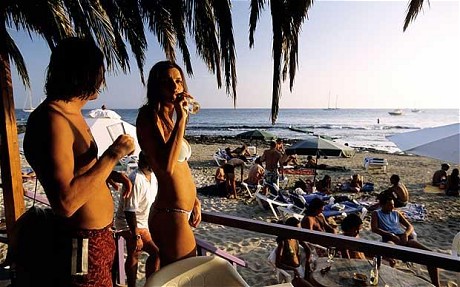
Although Ibiza is famous for having some of the best nightclubs in the world, the island also has an absolutely beautiful coastline with dozens of tiny coves to discover. The season gets going in May and outside the hottest months of July and August, all the Balearics are good for activity holidays, whether easy or more challenging, with plenty to see if you are interested in plants or birds.
Summer attractions and day trips
Formentera
Take a boat from Ibiza to this tiny island a couple of miles to the south. When you disembark at the harbour in La Savina, it is a good idea to hire a bike or scooter from one of the many outlets to explore the island. You might want to spend all day on one of the spectacular beaches – where nudism is the norm but not obligatory – or perhaps walk around the coast.
The salt pans are now a nature reserve and a haven for birdwatchers. There are regular services from Ibiza town, and also from Santa Eulalia, San Antonio, Es Canar and Playa d’en Bossa. Some ferries take about an hour and costs around £15 return, while the fast service takes 35 minutes and costs about £35 return
Diving

Conditions are ideal for diving around the coast of Ibiza, with clear water and water temperatures of up to 26 degrees Centigrade (80F) in summer. The sea bed in the Las Salinas national park is a World Heritage site, owing to the ecological importance of the seagrass that grows there. There are diving centres all over the island, including Active Dive in San Antonio ( www.active-dive.com) Diving Center San Miguel (www.divingcenter-sanmiguel.com) and Subfari in Portinatx (www.subfari.es).
Conditions are ideal for diving around the coast of Ibiza
Cycling
Hiring a bike is a great way to explore both Ibiza and Formentera. You can pick up maps of cycling routes from tourist offices, or download them from www.ibiza.travel/en/cicloturismo.php. From San Antonio, for example, there is an easy route along paths through fields to the village of San Rafael in the centre of the island.
My hotel pick: Cas Mallorqui lets visitors enjoy simple pleasures in this no-fuss hotel in an idyllic location, on the north coast in the village of Portinatx, overlooking a pretty bay with sparkling turquoise water.
Ibizasport, based in San Antonio, is a reputable bike-hire company. They also have routes for all levels on their website and can provide guides to accompany you. Bikes from €15 (£12.80) per day, including helmets and water bottle (www.ibizasport.com).
Aguamar
It may not be exactly state-of-the-art, but younger children love this waterpark next to the Space club in Playa d’en Bossa, which has seven slides with varying shriek factors, as well as pools and playgrounds. You can take your own food to eat in the picnic areas, and are allowed back in if you want to take a break on the beach for an hour or two.
Beaches
Cala Jondal, San José
 Of the 80 beaches in Ibiza, this is the most relaxed. Set in a secluded bay, with some of the most atmospheric bars and restaurants, Cala Jondal feels serene, sophisticated and happening all at the same time. Housed in a conservation area and overlooked by pine-clad hills, it offers a 20-yard deep slab of sand and pebbles, which slopes gently into the clear waters.
Cala Jondal is on the south-west tip of the island, 25 minutes by car from Ibiza Town or 35 minutes from San Antonio. Take the road from the airport towards Sa Caleta. A few hundred yards after you pass the bay of Sa Caleta, turn left and follow the signposts.
Las Salinas, Playa d’en Bossa
Named after the salt lakes in the south of Ibiza, this mile-long crescent of sand on the southernmost tip of the island is bordered by a small pine forest. With music blaring from the party bars, it’s here that you will find the most ostentatious clientele on the island.
There are plenty of buses from Ibiza Town. In a car, follow signs to the airport and then, at the roundabout by the Hippodrome, take the second turning to Salinas and follow the signs.
My hotel pick: The Ushuaia Beach Hotel is located right on Playa d’en Bossa and a couple of miles from Ibiza town, so you can slide straight into the groove with no boring transfers.
Playa Mitjorn, Formentera
 Formentera, the largest of the islands to the south of Ibiza, has the best Balearic beaches and Playa Mitjorn, on the south coast, which is formed by a series of coves, is the longest beach on the island, with white sands and placid seas. The area is relatively undeveloped and, on some days, it’s possible to find your own cove.
The beach, a rugged mixture of rocks, grasses and deep sand, extends across the whole south of the island, from La Mola to Cap de Barbaria, and there are great views from these promontories, plus a sprinkling of small restaurants and bars.
Take a short boat trip from Ibiza Town to La Savina. Take a bus from most places on the island or a short journey along the coast by car.
Cala D’Hort, near Cala Vadella
In the south-west of the island, the beach is a broad arch of fine, white sand with a mesmerising view of the volcano-shaped Es Vedra rock.
From Sant Josep de Sa Talaia, take the road towards El Cubells and turn off to Cala d’Hort after 3 miles (5 km). A steep hill at the end needs to be taken slowly. There is not much space to park, so get there early.
Festivals and events
Ibiza Rocks – June 5 to September 20
Jake Bugg is performing at the opening party of the summer music festival , and other acts include Bastille (June 26), Tinie Tempah (July 10) and Dizzee Rascal (August 28).
See ibizarocks.com
Sant Ciriac Festival – first week of August
Ibiza town and Formentera commemorate the return of the islands to Spanish rule in 1235 with processions, fireworks, music and dancing.
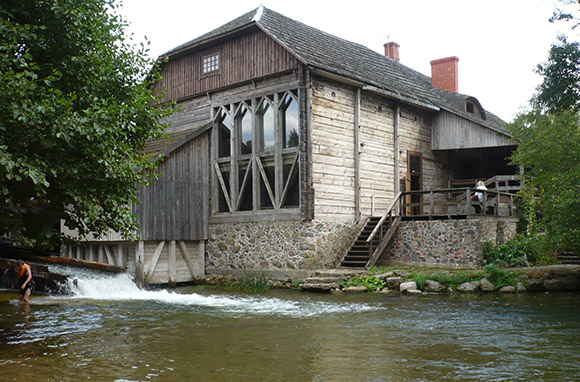
 Time stands still in the village of Ginuciai, an hour-and-a-half drive from Lithuania’s capital city. Home to medieval castles, untouched forests, and old-world tradition, this 16th-century village sits on a lakeshore in Aukstaitija National Park. According to the last census, only 69 people live here. Ginuciai once enjoyed fame for its 19th-century technical engineering feat that produced the village’s electricity: a wooden water mill with a water wheel, millstone, and sack uplift mechanism. The mill is still operational today and now also houses a museum and hotel. In the past, the mill was known as a place for mischief of devils, says Kestas Lukoskinas, a Lithuanian tour guide for Intrepid Travel. “Legends say some nights the devils would tear bags with flour and ride away on farmer’s horses,” he says. Displays and artwork by local artists depict this and other folklore of the region.


At the northern edge of Albania, in what locals call the Albanian Alps, a dirt road snakes between unforgiving peaks before finally arriving at the tiny remote village of Thethi. You’ll need to rent a 4×4 or hire a trekking guide to get here. This country, one of Europe’s last frontiers, spent 100 isolated years under the thumb of communist rule. Little has changed in Thethi since that era ended. Residents still live in traditional stone houses with wood-shingled roofs characteristic of the rural Albanian north. And the stone “lock-in” tower, which once sheltered people in times of blood feud, remains unchanged. Never under Ottoman jurisdiction, this area developed its own set of traditional laws and passed them down from one generation to another. Most are still observed today.